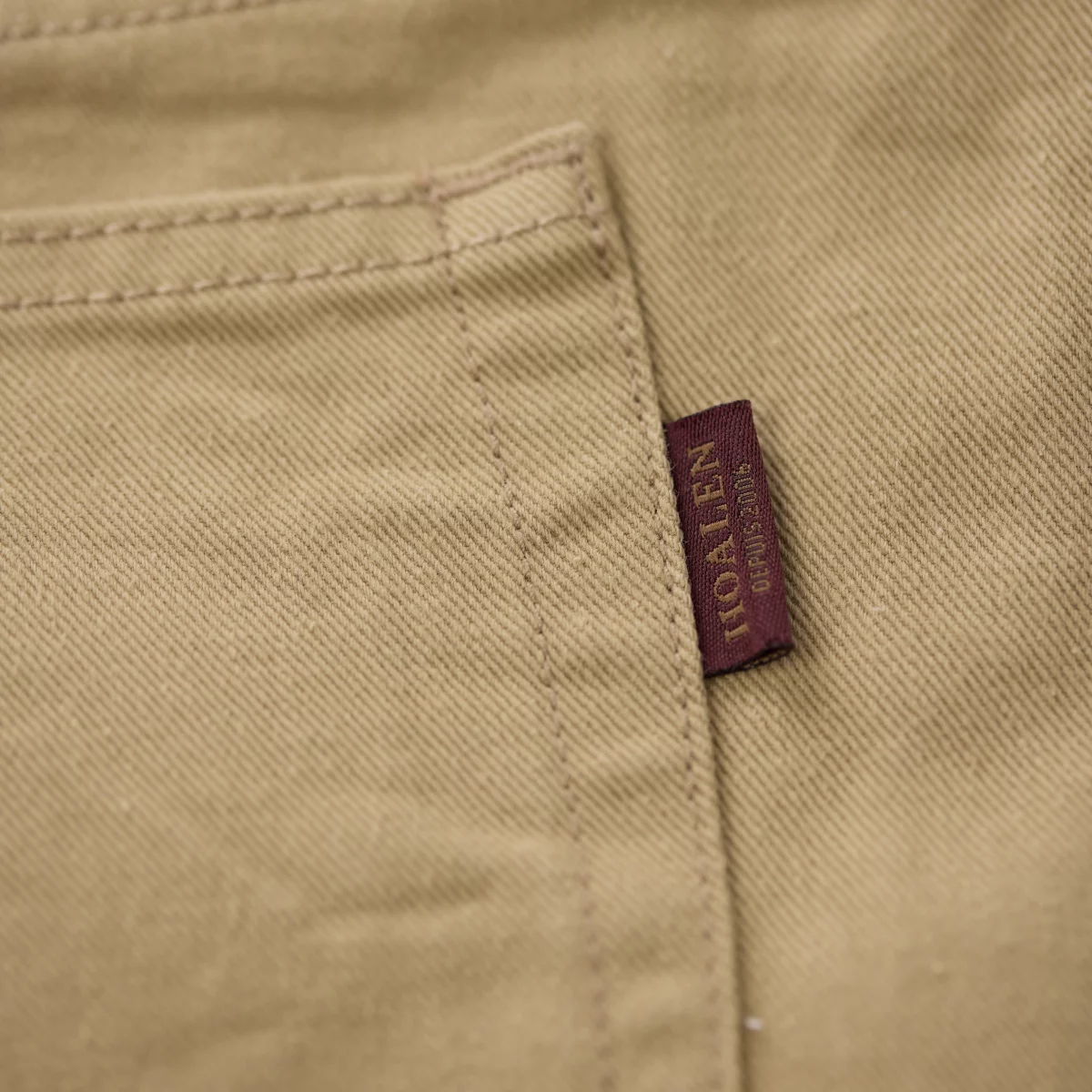
Red-Selvedge denim
Japanese craft excellence versus industrial production
Red-selvedge denim is a singular fabric. We chose this fabric for its quality, durability and unique look.
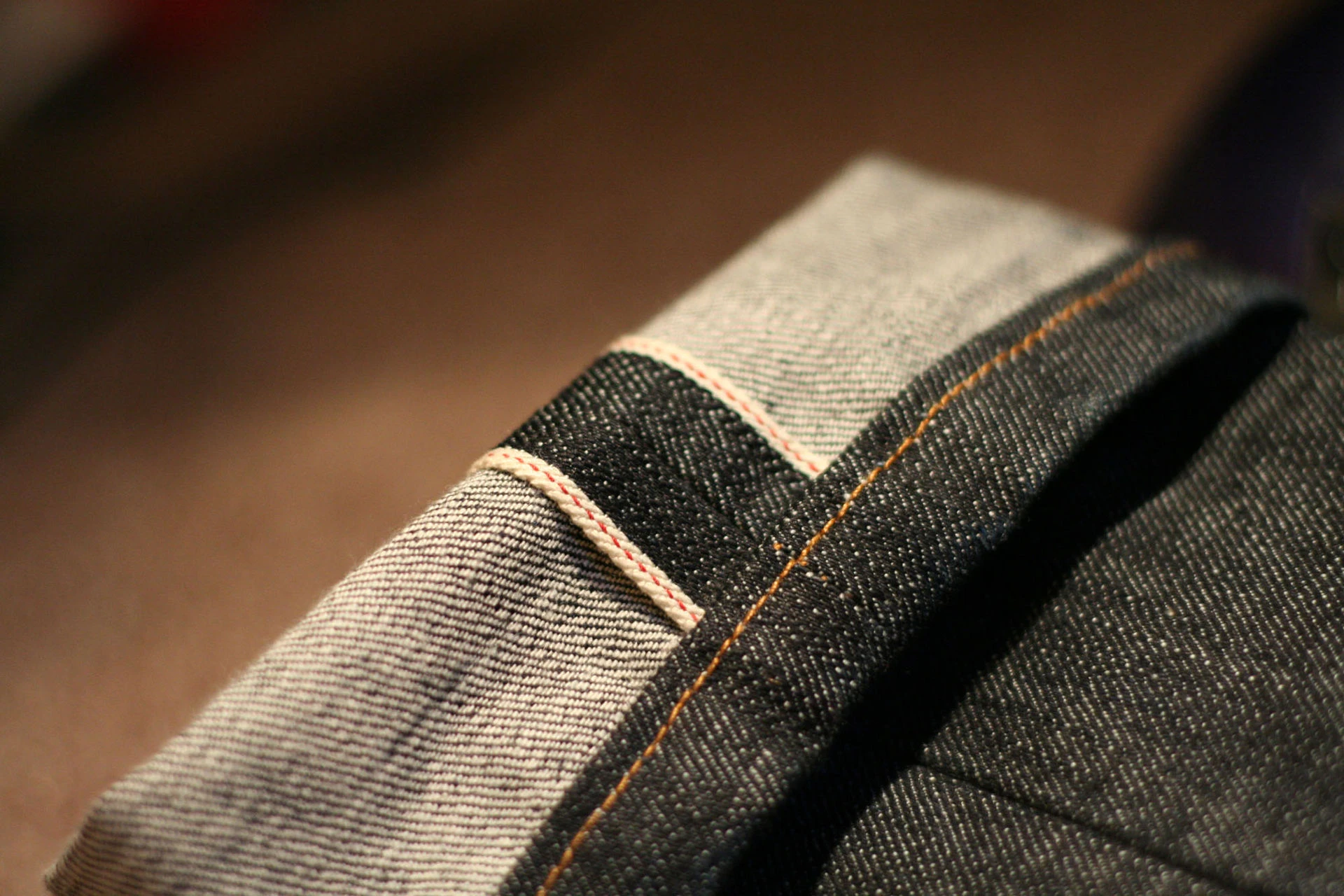
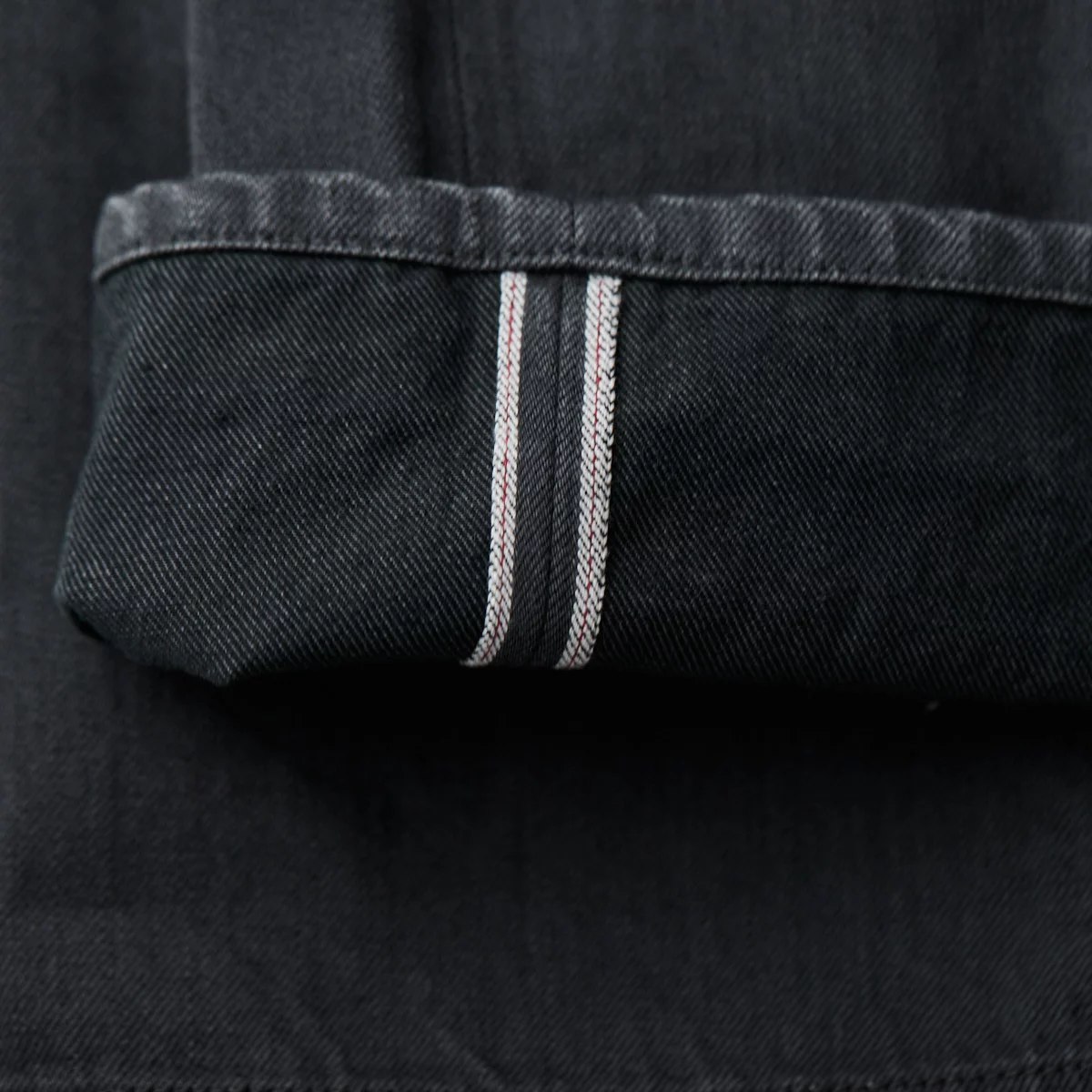
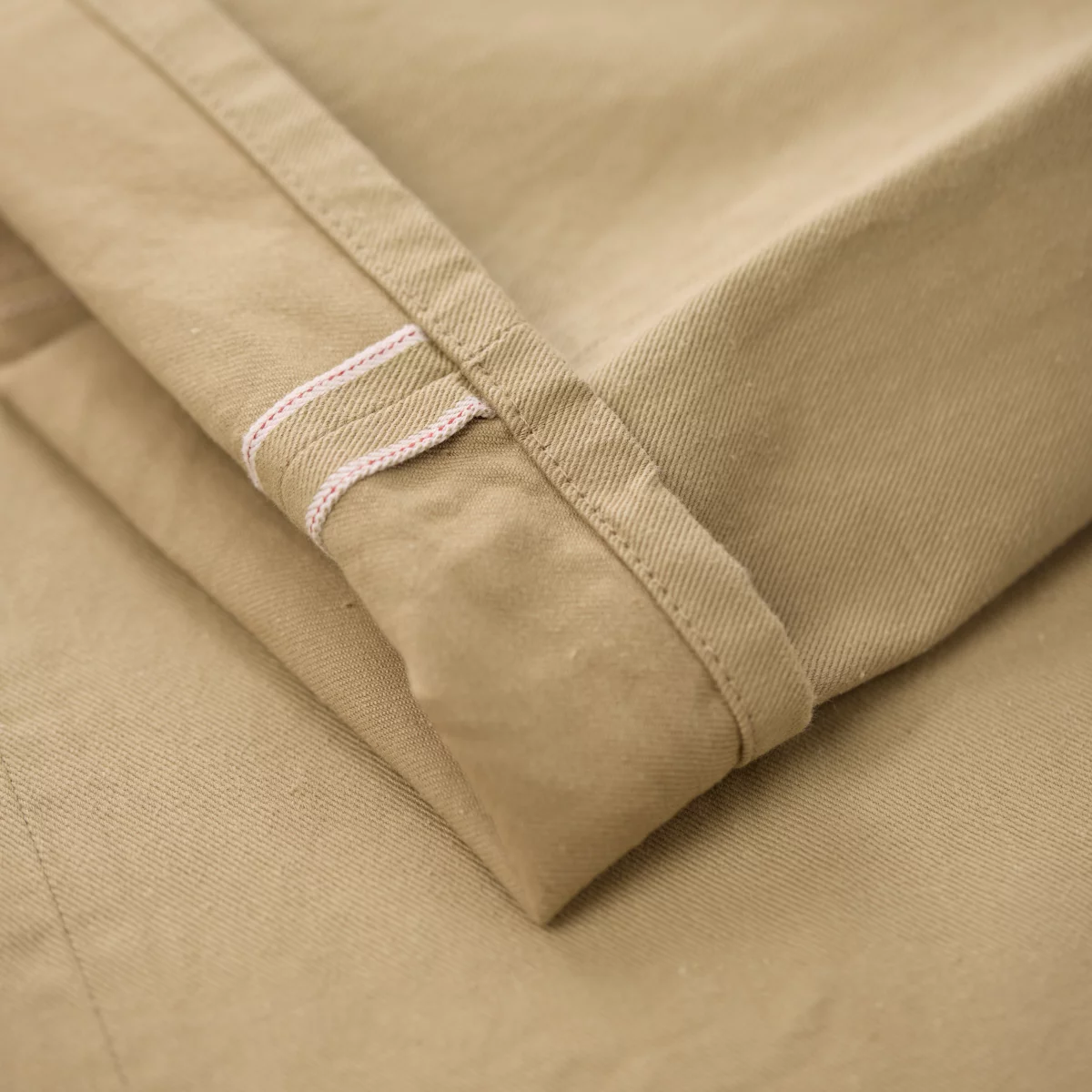
Selvedge is short for “sel finished edge,” which refers to the finished edge found at both ends of a length of denim fabric. These edges are reinforced for greater strength and to prevent fraying. It is made using manual weaving machines.
Denim is made from cotton fabric with a twill weave: a technique that interlaces indigo blue warp threads with ecru white weft threads. This fabric is mainly used in the manufacture of jeans and jackets.
The term “denim” is a contraction of “de Nîmes,” referring to the city with the amphitheater in the south of France. Denim fabrics were originally made there in the 16th century. At that time, they were made of wool and silk. It was not until two centuries later that this fabric was made exclusively from cotton.
Thus, the combination of the terms “selvedge denim” refers to the type of weave and its finish.
Denim selvedge's history
Our story begins in the 19th century in the United States of America. The industrialization of the American economy is in full swing. American weavers imported looms from Europe to manufacture fabrics that met the demands of workers. Different manufacturers distinguished themselves by using different colors for the selvedge: red for Levi's, yellow for Lee, green for Wrangler. Selvedge denim exploded in popularity, and for good reason: it was omnipresent in American life. In Hollywood, on New York skyscraper construction sites, and in the plains of the Midwest, the playground of cowboys, selvedge denim became an essential part of the American worker's wardrobe.

But here's the thing. Due to its exponential rise in popularity, manufacturers were unable to keep up with demand and had to abandon European looms. These were considered too slow and inefficient. New machines were developed: they were twice as fast and produced fabric sheets twice as wide as before. During the post-war economic boom, large-scale industrial production took precedence over selvedge denim production. Less durable fabrics with synthetic colors washed out with pumice stones replaced those dyed with natural indigo. Selvedge denim jeans, which took longer to produce and required more fabric, were then abandoned. They reappeared in the 1980s, when the first Japanese importers brought old looms from the United States and produced their own fabric.
Unrivalled quality
Red selvedge denim garments guarantee authenticity and quality. They are the choice of jeans purists.
This fabric lives and ages over time, adapting to your body shape like a second skin. Its density and strength create a real texture.
Japanese selvedge denim excels in its level of finish and the workmanship that goes into the fabric. Unlike uniform industrial weaving, each thread tells a story of craftsmanship. Its imperfections give it character, comparable to a hand-knitted sweater.

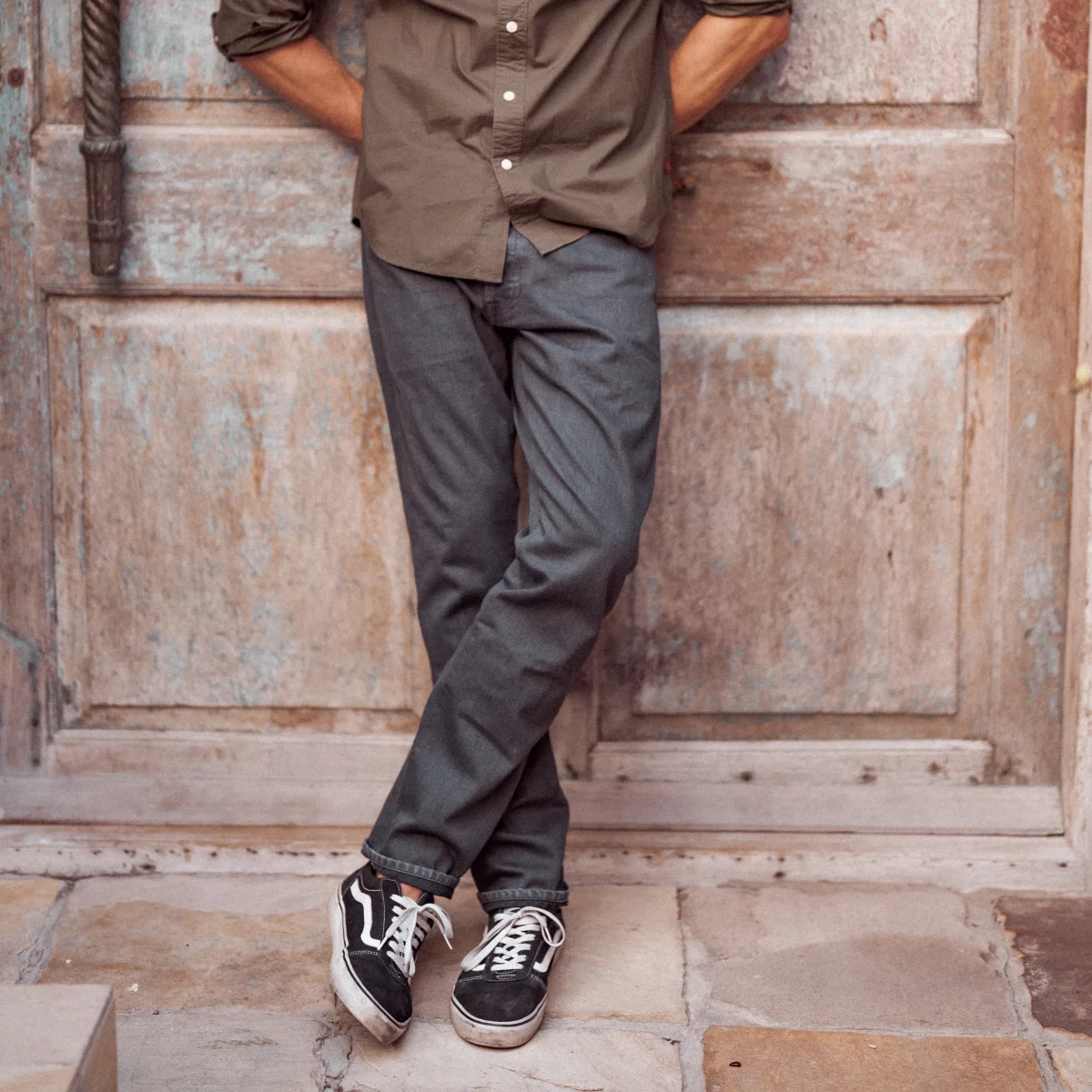
Its tight weave offers greater durability and a more attractive appearance than standard denim. Japanese jeans retain their color longer and develop a unique patina over time, reflecting the history of their wearer.
For jeans that carry history and exceptional quality that will stand the test of time, red selvedge denim is a must.
Care Instructions :
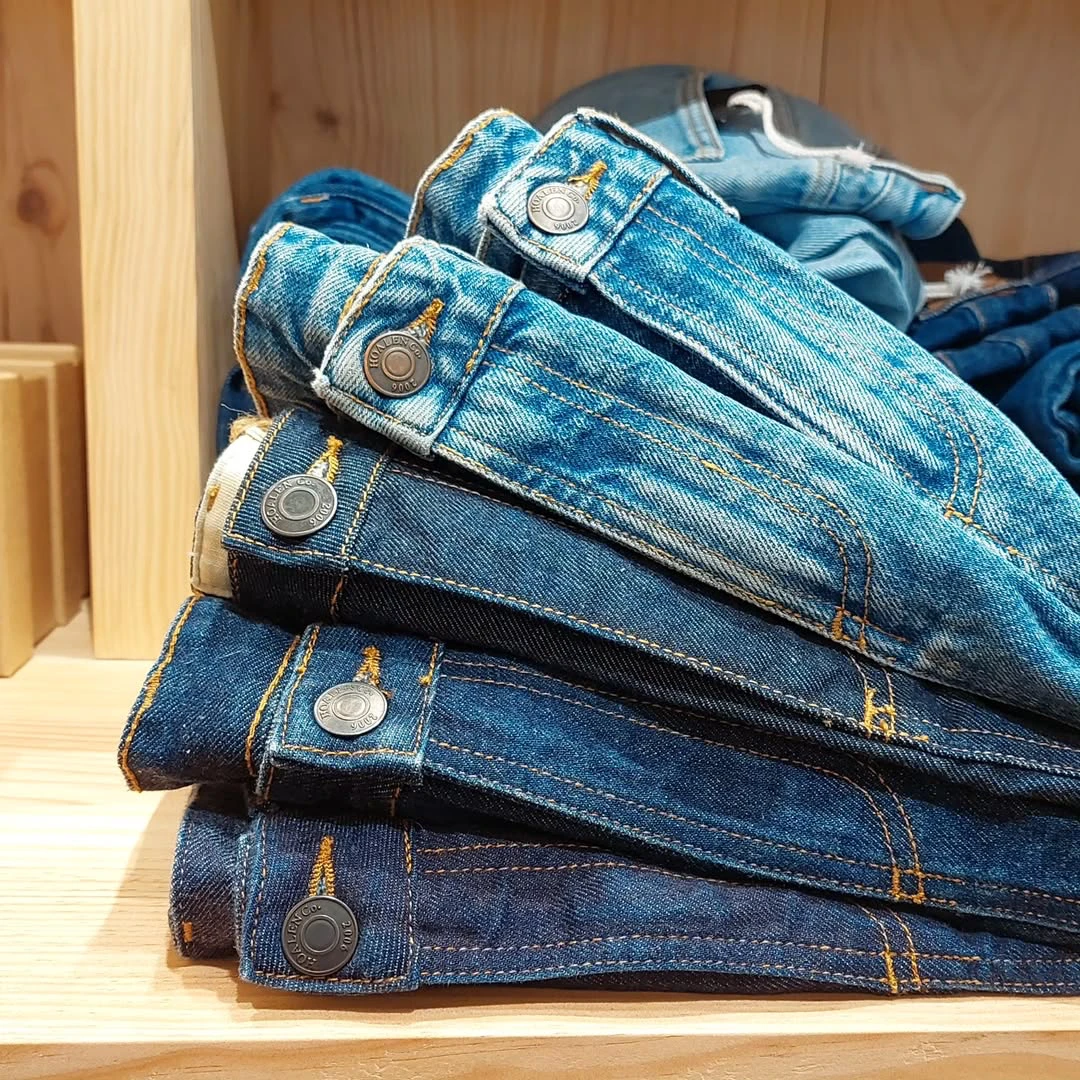
Japanese yarn-dyed denim jeans of this quality are not everyday items that can be washed like the rest of your laundry. The fabric requires minimal washing while allowing for long-term daily wear. We recommend delaying the first wash so that the fabric can adapt to your body shape and become like a second skin. Then wash your jeans at 30°C. Wash them inside out in cold water, spin gently, dry naturally and iron on a low setting.
Our models in red-selvedge denim:
Hoalen has called on a Japanese denim manufacturer who is an expert in red selvedge denim. The word “selvedge” is a contraction of the expression “self-finished edge,” which literally means “edge finished on itself.” Selvedge fabric is therefore fabric with a finished edge, as opposed to an unfinished edge, where the fabric frays. It is this edge that forms the famous “selvedge stripe,” usually red in color, which appears when you hem the inside of the fabric.
Selvedge refers primarily to a high-end quality of denim because it is thicker and woven more slowly using old looms, which create variations and imperfections that give this fabric its charm and uniqueness. Historically created for workwear, red selvedge denim offers superior resistance to impact and friction caused by harsh conditions.